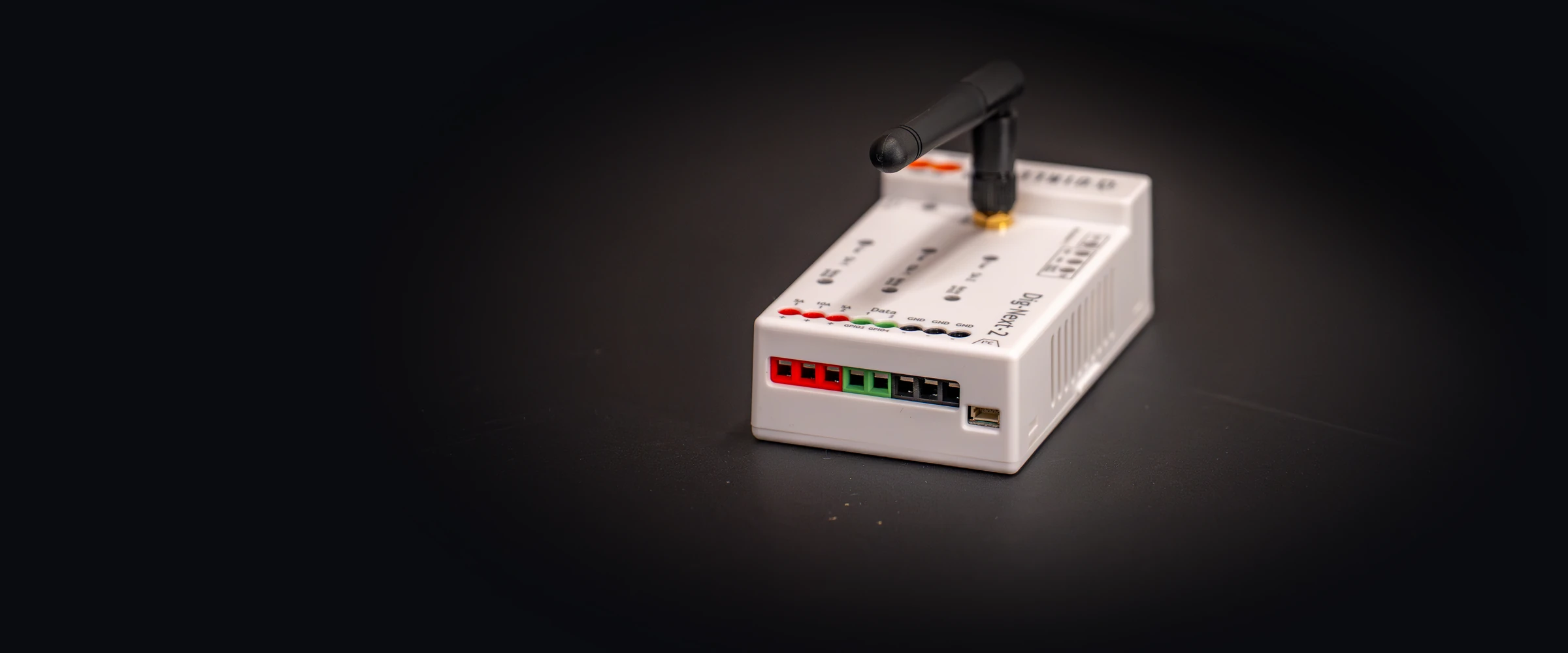
A premium, all-in-one WLED controller that commands every pixel, with pro-grade protection built in. Excellent engineering, easy to set up, glowing for years.
From $29.99 · at authorized retailers →
What is the Dig-Next-2? An all-in-one WLED addressable LED controller from QuinLED: a dual-core ESP32 board with true 5–48V input, two level-shifted data outputs and three individually fused power outputs, built to run LED strips in your home safely, around the clock. It ships running WLED, so setup is a phone app, not a programming project.
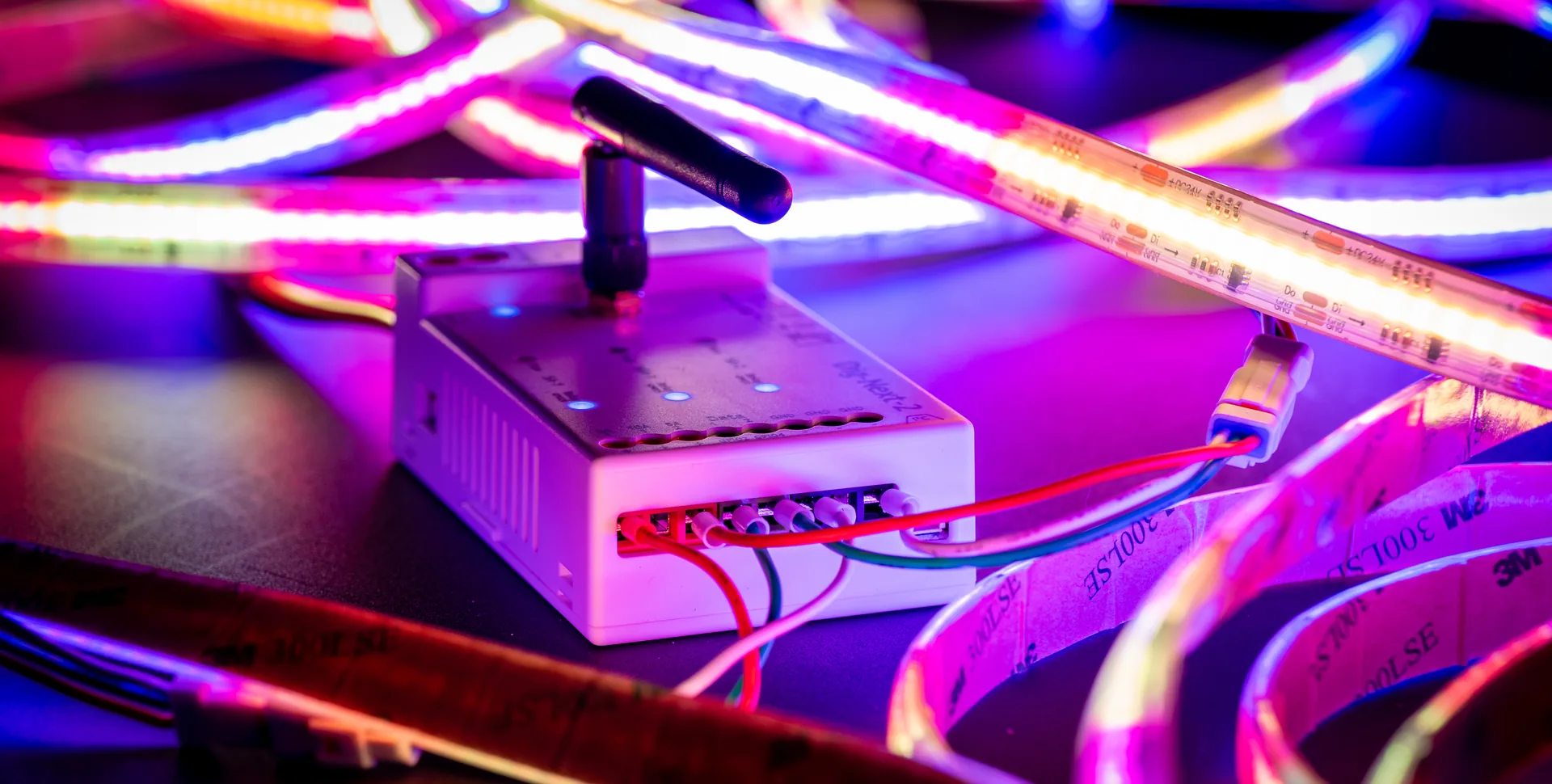
Drive thousands of addressable LEDs (WS2812, WS2815, WS2814, SK6812, APA102 and more) at rock-steady framerates with zero flicker, even on 10-metre runs.
Everything you need to light a room beautifully, and nothing you have to fight with.
Two independently level-shifted data outputs push clean signal up to 10 m guaranteed (30 m tested), roughly 1,200 LEDs with no flicker.

Ships running WLED. You're on Wi-Fi and glowing from your phone in minutes, no code. And it's your hardware: reflash it for ESPHome, FastLED or Moonlight whenever you like.
One controller for 5V, 12V, 24V, even 48V strips. It senses your voltage and adapts. No jumpers, no guessing.
Switch each output fully off in software through a solid-state MOSFET. No idle drain, no relays to wear out.
A built-in microphone for sound-reactive effects, button inputs, and a QEXP header with spare GPIOs and I²C. Wire in switches and sensors, or just sync your lights to the music.

Designed and refined by QuinLED over generations of LED controllers, and trusted in thousands of home and pro builds. Real engineering, not a rebadged board.
Most controllers are built as cheaply as possible, the last thing you want running unattended in your home. The Dig-Next-2 is built to be the exception, protected on every path, around the clock.
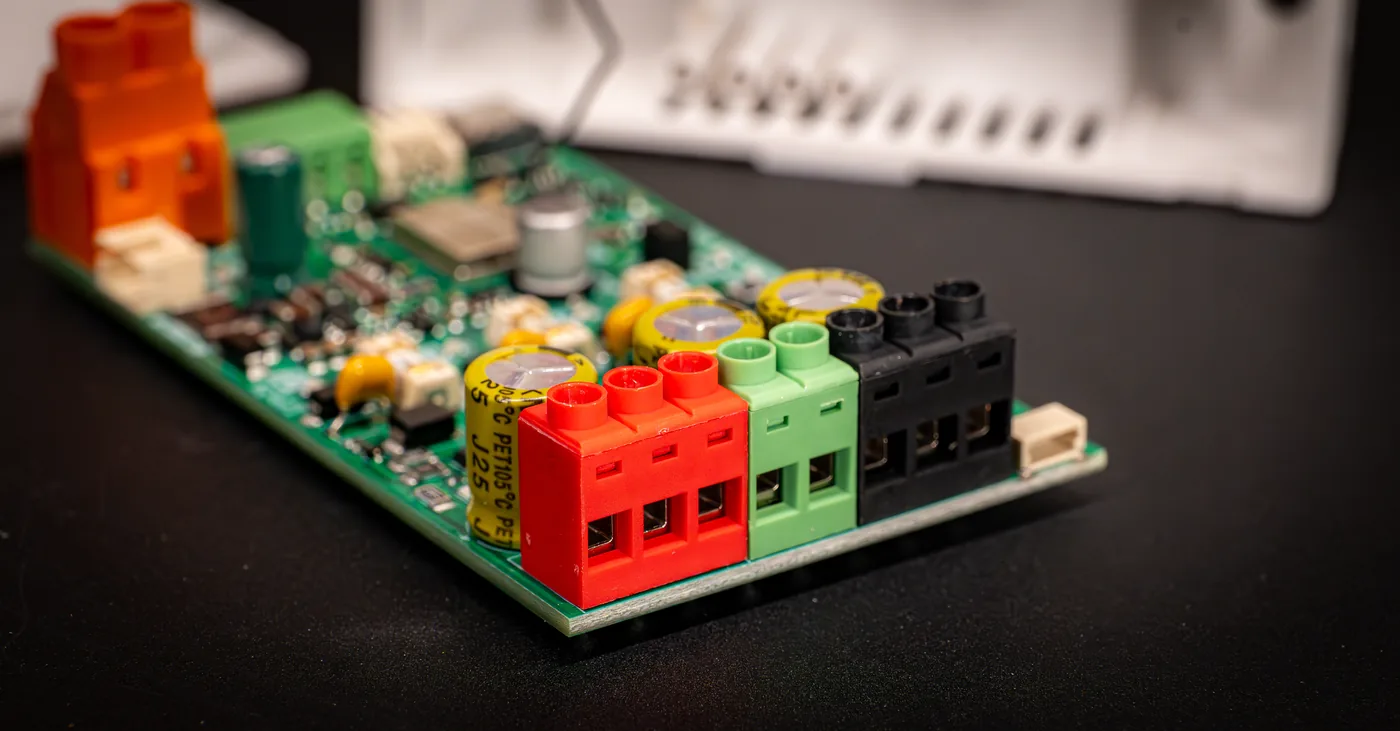
Competitors leave these out to save a dollar. We don't, because it's going to live in your home.
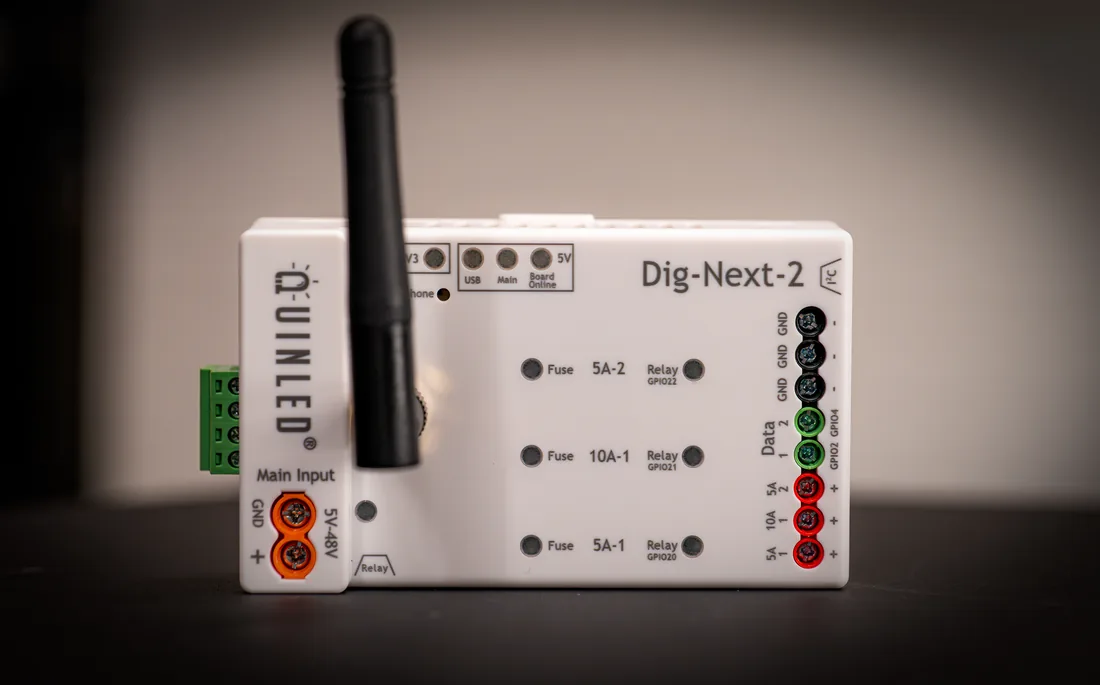
| Processor | ESP32 dual-core 240 MHz · 8 MB flash · 2 MB PSRAM |
| Connectivity | 2.4 GHz Wi-Fi · external screw-on antenna · USB-C |
| Firmware | WLED-native · also ESPHome, FastLED, Moonlight |
| Data outputs | 2× level-shifted · ESD & over-voltage protected · ~10 m guaranteed |
| Power outputs | 3× individually fused (2× 5A + 1× 10A) · software-switchable |
| Protection | Reverse-polarity protected · internal circuit fuses |
| Input | True 5–48V auto-sensing · 15 A continuous |
| On board | Microphone · button inputs · QEXP GPIO · I²C (Stemma QT) · Relay (JST-PH) plug-in headers for extra sensors, switches and an external relay |
| LED support | WS2812B · WS2815 · WS2811 · WS2814 · SK6812 · APA102 · Dig-COB |
| Capacity | ~1,200 addressable LEDs |
| Enclosure | Finished custom case · optional DIN-rail mount kit |
The Dig-Next-2 is a true all-in-one: power supply in, LEDs out. The fuses, level-shifters and control are already on board, so there are no external components to buy.
⚡ Use a power supply that matches your LED strip's voltage: 5V, 12V, 24V or 48V in, the same to your LEDs.
Power it. Connect your supply to Main Input (GND and +). It auto-senses 5–48V, so just match your LEDs' voltage.
Data to the strip. Run the Data output to your strip's data-in (DI). The signal's already level-shifted and clean.
Power the strip. Feed the LEDs from a fused output (GND and +). That's it: lit, and protected.
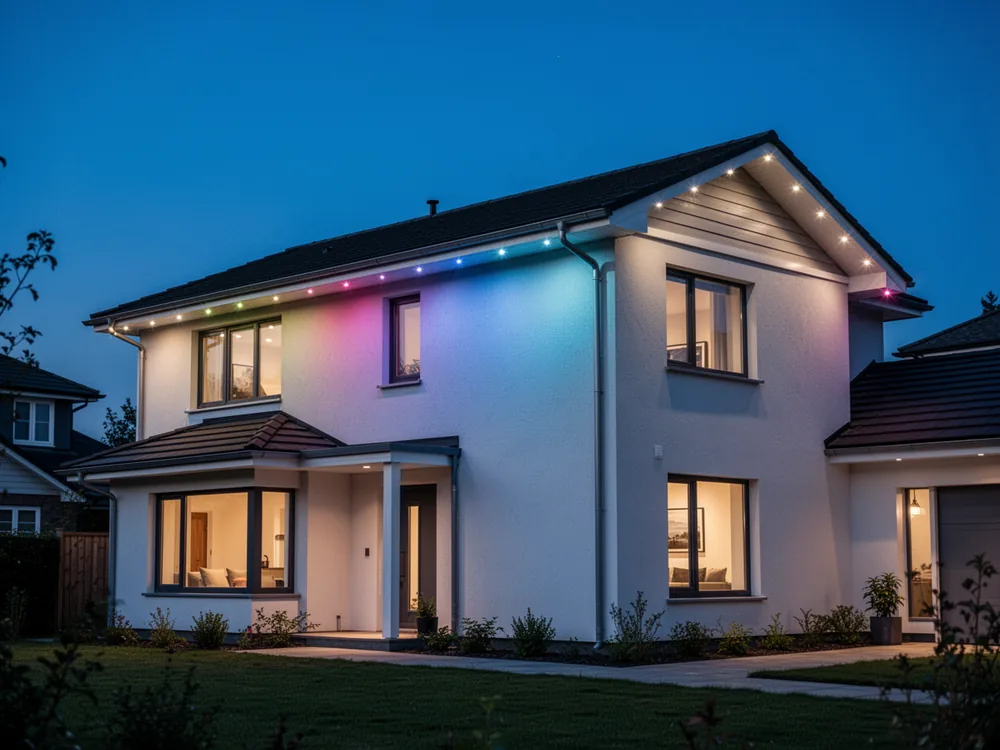
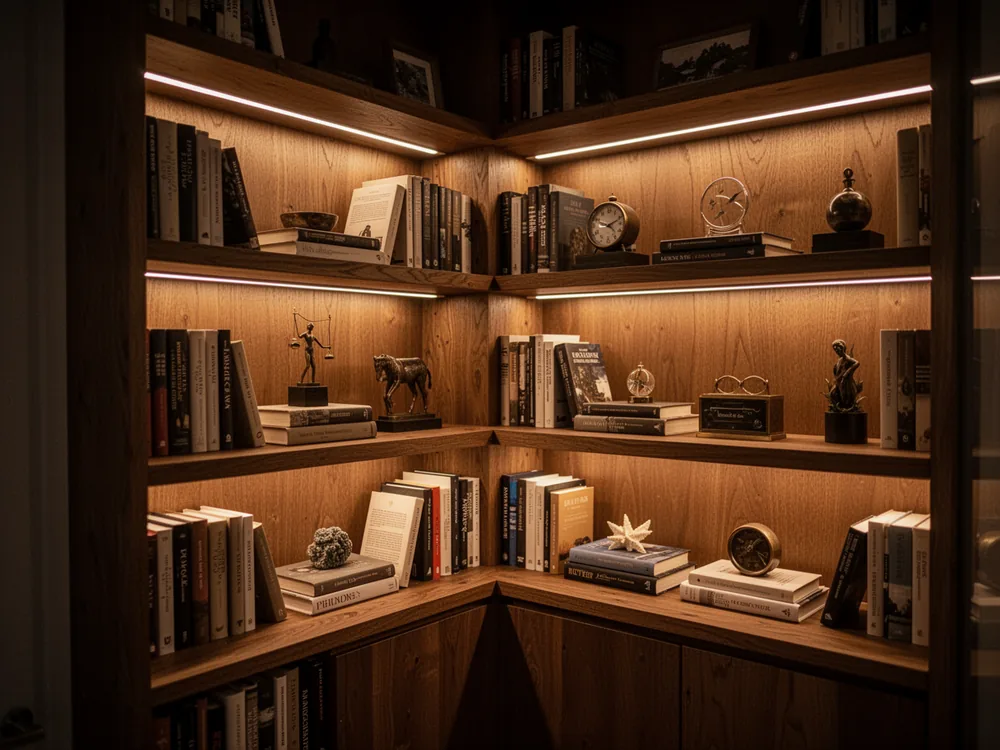
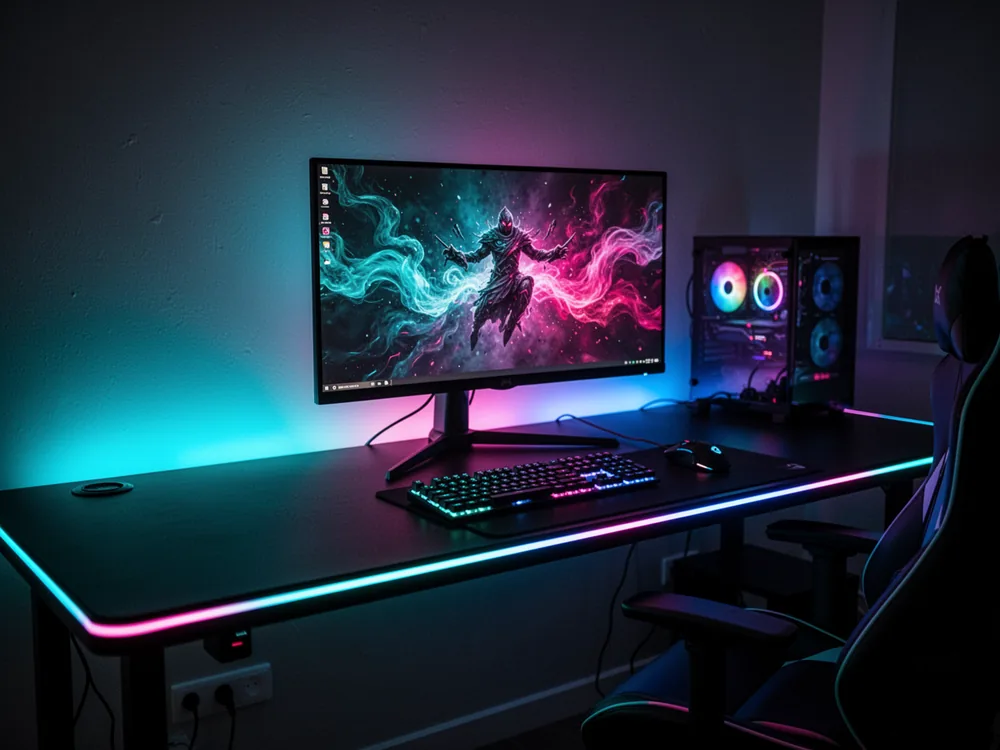
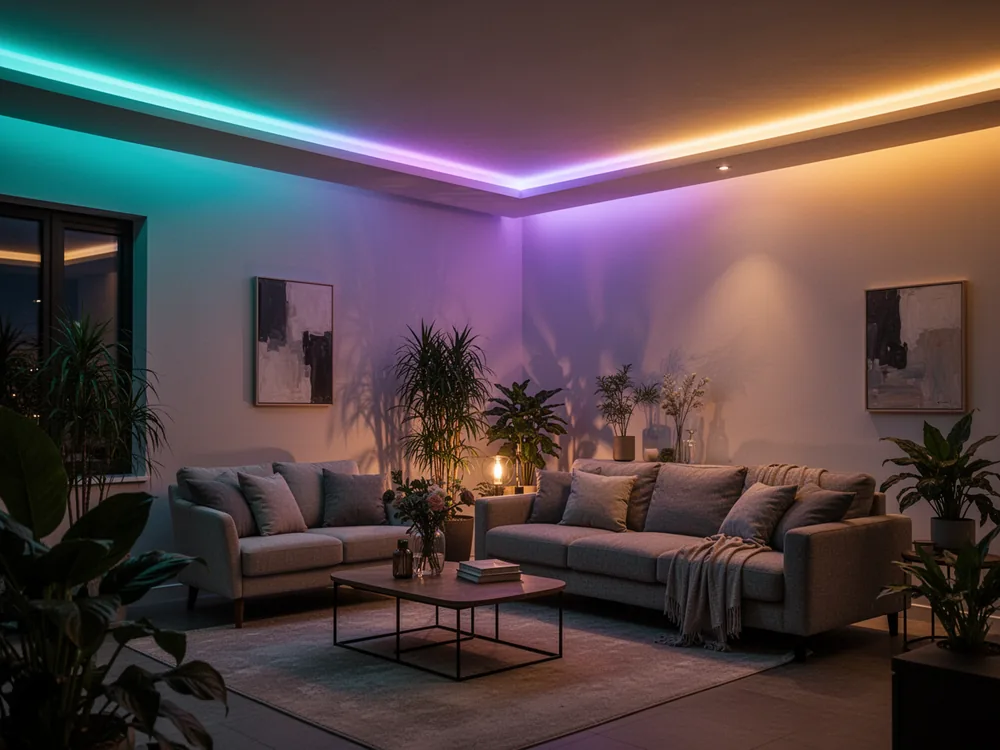
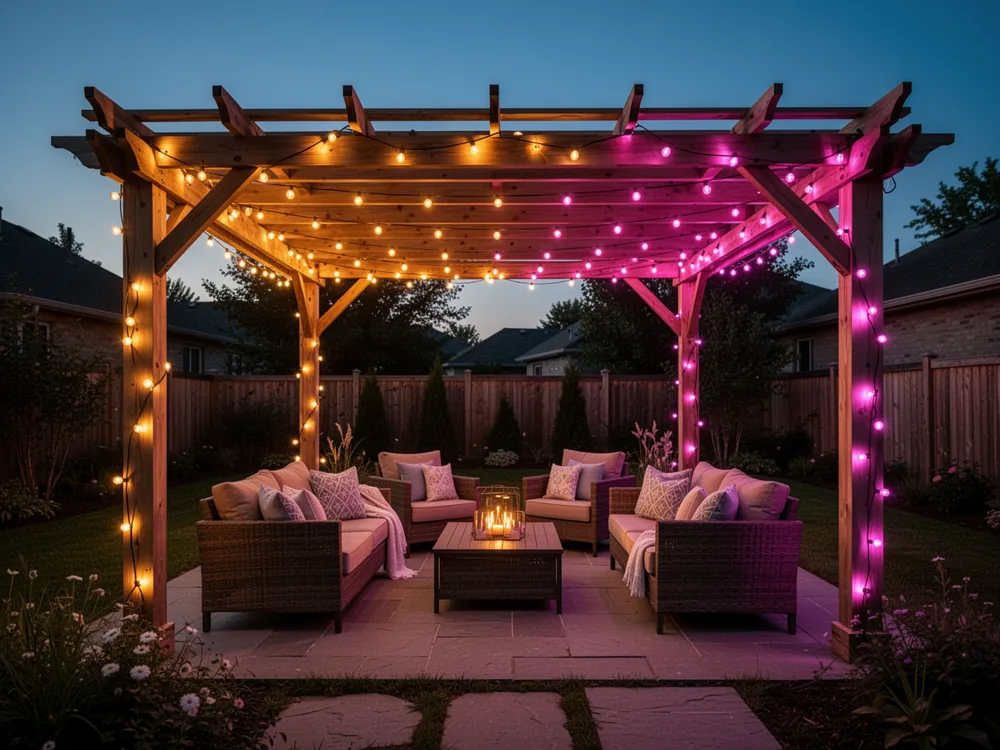
Every scene below is one Dig-Next-2 doing the work, quietly, safely, all day. Click any image to enlarge.
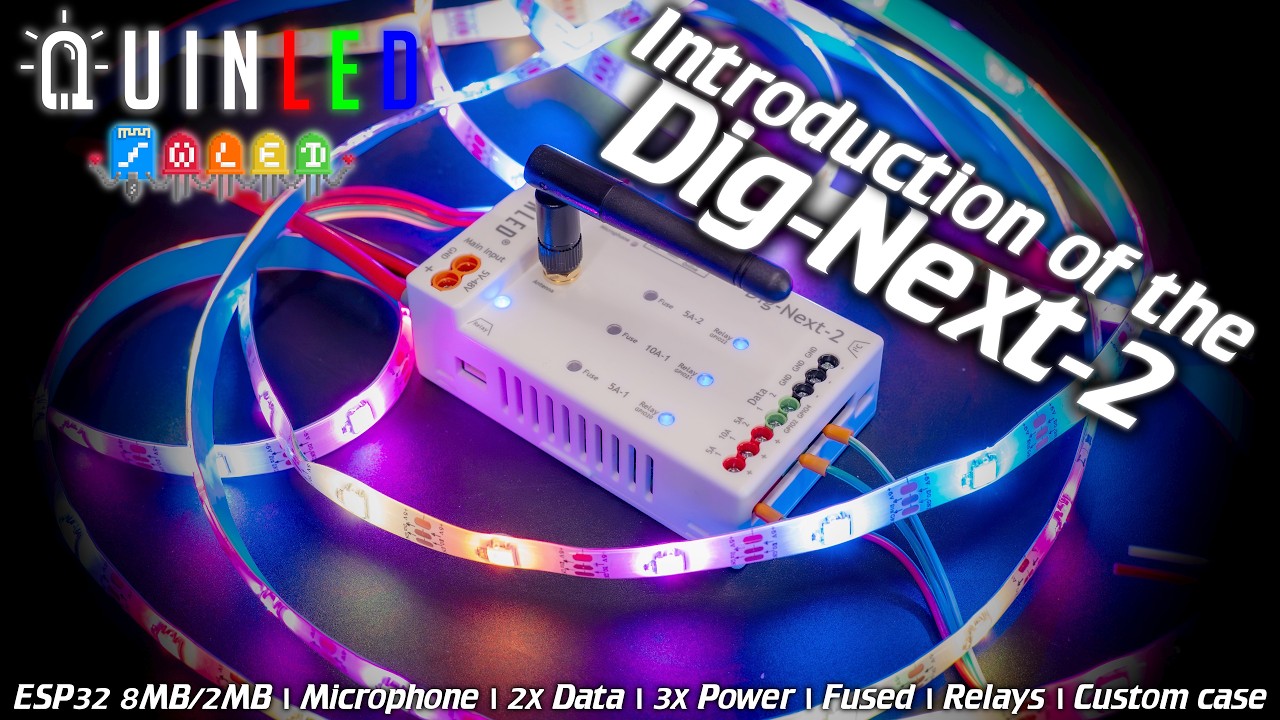
A quick tour of the Dig-Next-2: what it does, and why it's built the way it is.
The essentials are below. For the full set, from wiring and power injection to first WLED setup and troubleshooting, see the Dig-Next-2 FAQ or follow the step-by-step setup guide.
It's a premium, all-in-one addressable-LED (pixel) controller built around an ESP32. It drives WS2812, WS2815, WS2814, SK6812, APA102 and similar strips, runs the popular WLED firmware out of the box, and packs pro-grade protection, including individually fused outputs and internal fuses, so it's safe to run in your home around the clock.
Yes. It ships running WLED and is purpose-built for it: a fast dual-core ESP32 with extra memory, an external Wi-Fi antenna for a solid connection, hardware level-shifting on both data outputs for a clean signal, and built-in fusing most controllers leave out. It's a serious step up from a bare clone board.
5V, 12V, 24V and up to 48V addressable strips, including WS2812B, WS2811, WS2815, WS2814, SK6812 and APA102, plus the QuinLED Dig-COB. The input is auto-sensing "true 5–48V", so it adapts to your strip's voltage automatically.
Around 1,200 addressable LEDs total across its two data outputs while keeping a smooth framerate in WLED, with reliable data over runs up to 10 m (and 30 m demonstrated in testing).
No. The Dig-Next-2 is all-in-one: level-shifters, fuses and per-output power switching are already on board. Connect a power supply and your LEDs and you're done; there's nothing extra to buy.
Use a DC power supply that matches your LED strip's voltage (for example a 12V supply for 12V strips) with enough wattage for your number of LEDs. The controller accepts 5–48V on its main input.
That's exactly what it's designed for. Each of the three power outputs has its own replaceable fuse (2× 5A + 1× 10A), internal fuses protect the board's own circuits, it's reverse-polarity protected, and the data outputs have ESD and over-voltage protection.
Yes, there's a built-in microphone, so WLED's sound-reactive effects work out of the box. There are also button inputs and a QEXP header with spare GPIOs and I²C for switches, sensors and expansion.
It's sold worldwide through quinled.shop, with regional partners covering the US (DrZzs), the EU (QuinLED NL), Canada (Jerems) and the rest of the world (Allnet). Pricing varies a little by region, so check the shop for the current price.
Full guides live at quinled.info, and you can re-flash the bundled firmware over USB at install.quinled.info. For hands-on help, join the Intermittent Technology Discord and the #quinled-troubleshooting channel.
Pro-grade protection, easy to set up, and built to glow for years. Pick one up at the official QuinLED shop.
Designed by Quindor, creator of the QuinLED project. Backed by 60,000+ subscribers on YouTube and 13,000+ makers in the Discord.